A scientific bug

The Robot Bug project allows children to explore the fascinating world of vibration and frequency in a fun and hands-on way!

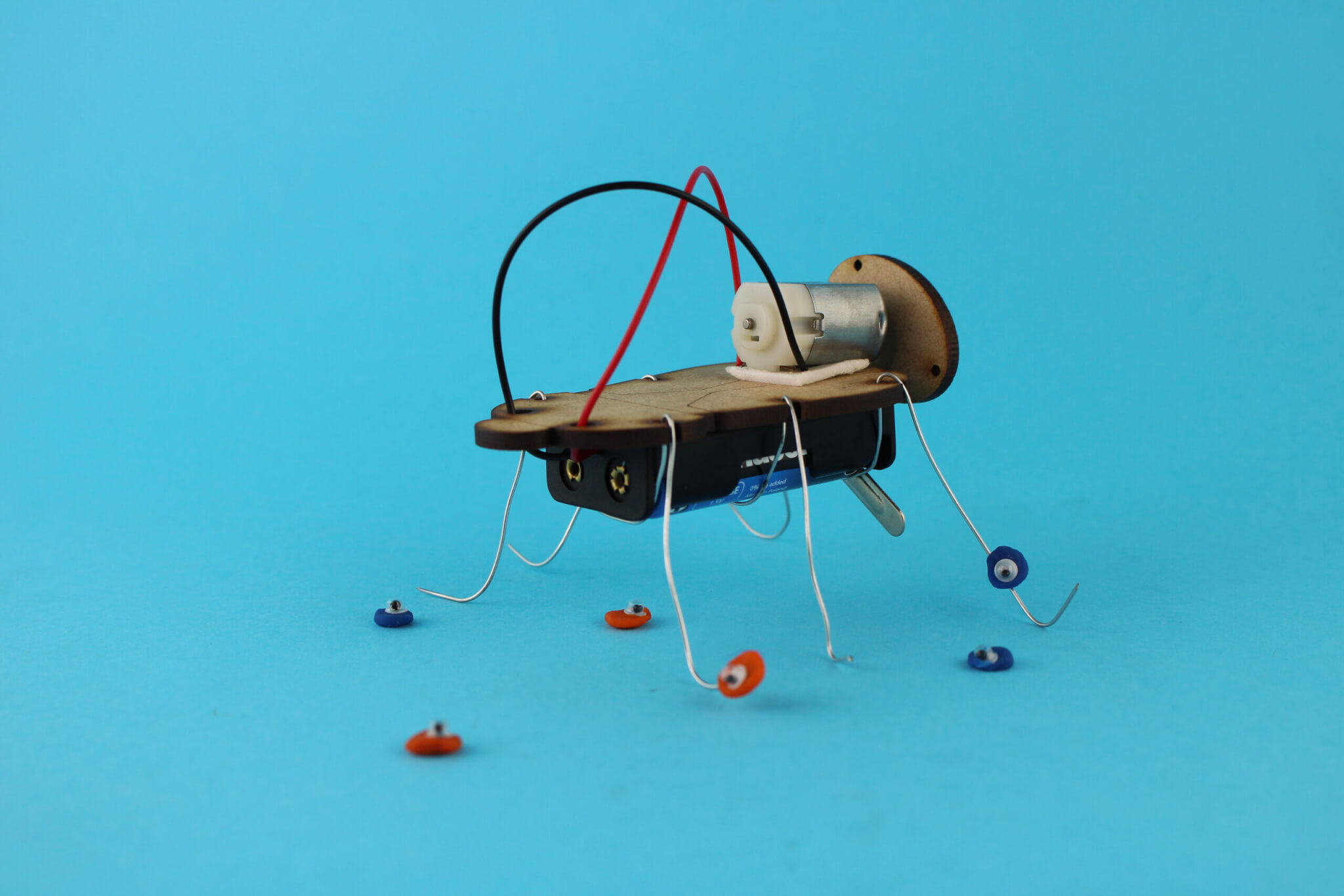
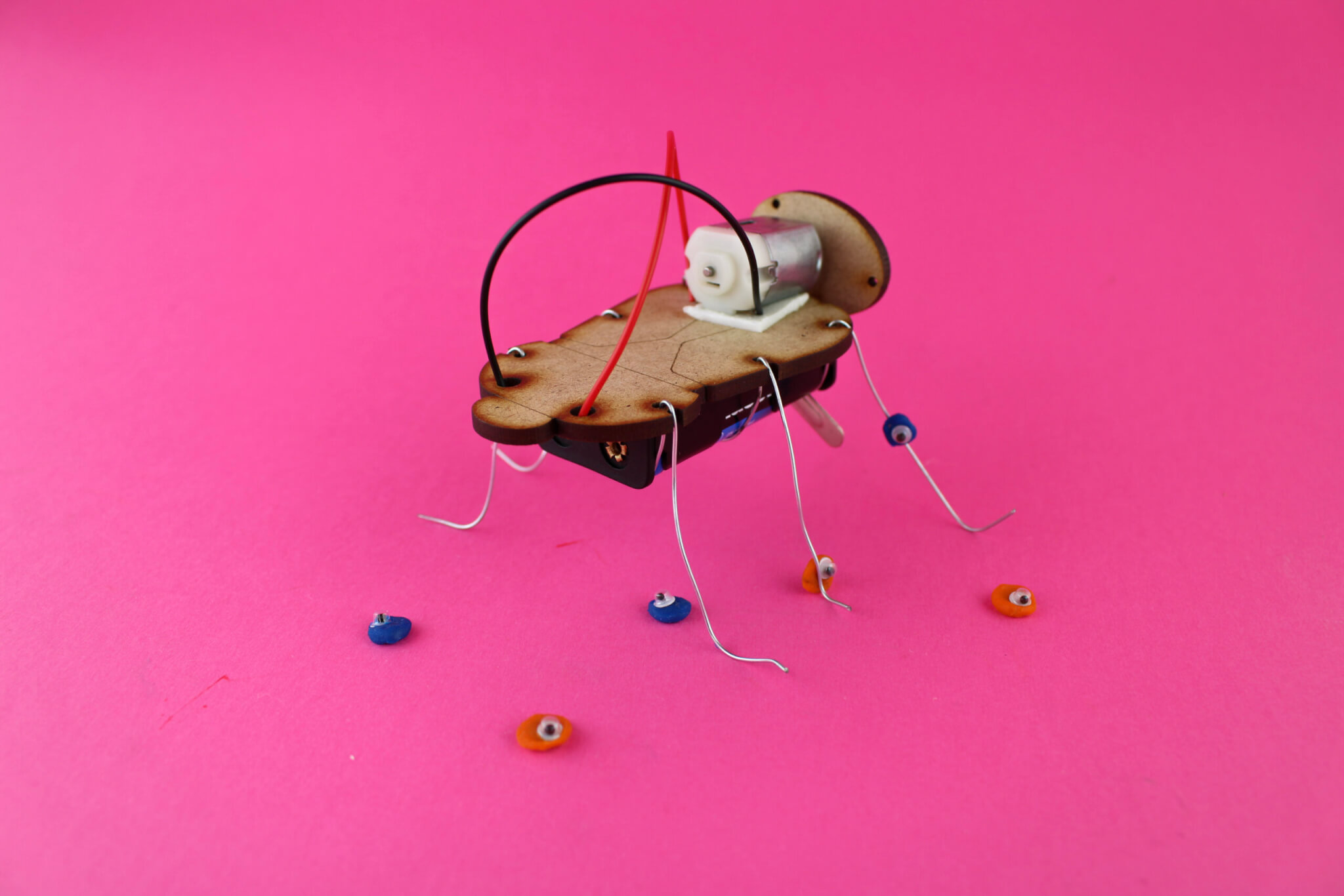
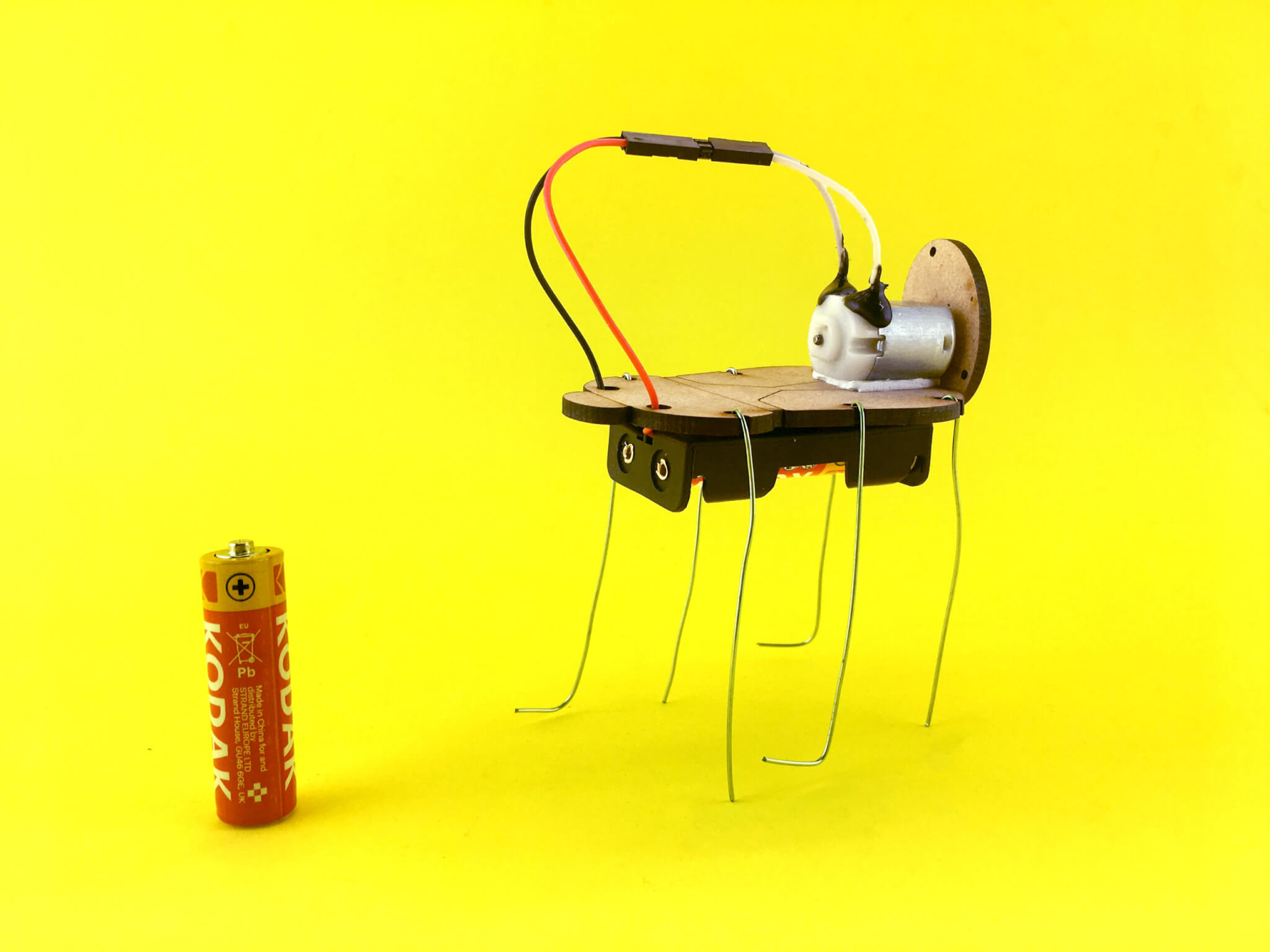
The Robot Bug experiment is a fun and educational activity in which children will build a a robôt using motors and pendulums. The experiment culminates in interactive games, where the robots capture objects scattered around the room or compete in races to determine which is the fastest.

This experience sparks children’s curiosity and creativity about the world of vibration, frequency and insects . It allows children to learn important  scientific concepts, that have been explored by many pioneers of science, in a practical and enjoyable context, encouraging them to explore the world around them with an inventive mindset. This reflects the mission of inspiring future inventors and innovators to think outside the box and apply their knowledge in innovative ways.

About InspiringInventors

Grace Hopper

Grace Hopper

(1906-1992)

Was an computer scientist, mathematician, and United States Navy rear admiral. In 1947, while working on the Harvard Mark II computer, Hopper and her team encountered a technical malfunction. They discovered that a moth had been trapped inside a relay. They carefully removed the insect and taped it into their logbook, labeling it as the “first actual case of a bug being found.” Hopper’s documentation of the moth helped cement its use in the field of computer science. The term “debugging” also became widely adopted to refer to the process of identifying and fixing errors in code or hardware. She was a pioneer of computer programming, the first to devise the theory of machine-independent programming languages.

Ask Grace Hopper

The AI version of Grace Hopper answers your questions

This dialogue box uses artificial intelligence and is configured to respond exclusively to questions related to the project, its concepts and associated fields, as well as queries and curiosities about the history of each inventor. Questions outside this scope may not be answered. Always use under adult supervision.

Thank you for your understanding.

ConceptsCovered

Vibration and frequency

VIBRATION: Through this experience children learn that vibration is a regular or irregular and repetitive movement that occurs within a given time interval. In the Robot Bug, the vibration will be induced by the movement of the pendulum in the motor. By changing the position of the pendulum, we alter the movement of our robot

FREQUENCY: Children also learn that frequency measures the number of occurrences of an event. In this case, it measures the number of occurrences of a given vibration. The International System (SI) unit for frequency is the Hertz (Hz). The inverse of frequency is the period, with the unit being the second (s)


Insects

  • INSECTS: Through this project, children also learn about the structure of insects! They learn that their bodies are divided into three parts: head, thorax, and abdomen. They have six legs (unlike spiders, which have eight!) and their bodies are covered by an exoskeleton (a skeleton on the outside of the body). The science that studies insects is called Entomology

Why this project?

The Robot Bug project was created with three main objectives:

  1. Understanding the importance of concepts: Enabling children to learn about scientific concepts, such as vibration, frequency, and also insects, through practical demonstrations, culminating the experience with the creation of a Robot Bug, a small insect-shaped robot!
  2. Explaining the relevance of concepts nowadays: The concepts of vibration and frequency remain fundamental in the development of advanced technologies. They impact sectors such as telecommunications, music, civil engineering, and robotics.
  3. Focus in Creativity and an Inventive Spirit: By taking part in this  process, children develop skills such as problem-solving, critical thinking, and motor coordination.

At the end of the session, in addition to building an Robot Bug, children will also gain a new appreciation for the world of biomimetics, and how this continues to inspire new technologies in areas such as space exploration, healthcare, and product design.

Together, we can discover how to make a bug work for science!

Challenges for you

Ask your young inventor what excited them the most about the session, or challenge them to make a race at home with Robot Bug!

For the boldest ones, how about sharing the impact of the Robot Bug race at home, and showing it to us on social media?

Link to Instagram

Together, let's make learning even more memorable and...robotic!

The Inventors UK
Privacy Overview

This website uses cookies so that we can provide you with the best user experience possible. Cookie information is stored in your browser and performs functions such as recognising you when you return to our website and helping our team to understand which sections of the website you find most interesting and useful.